
An Uncodified Constitution
It is common knowledge that the United Kingdom has never codified its constitution. In taking this path, our constitution is bestowed with the unique capacity to change with the times, paying due respect to the centuries of tradition that have afforded our ancient rights and freedoms.
Our constitution is inherently political in nature. It has basis in law, but is subject to change through the democratic process of the King-in-Parliament, the sovereign lawmaking body in this country. This page will seek to identify some of the cornerstones, explain them in detail, and serve as a guide with which to interpret the role and extent of constitutional law in the United Kingdom.
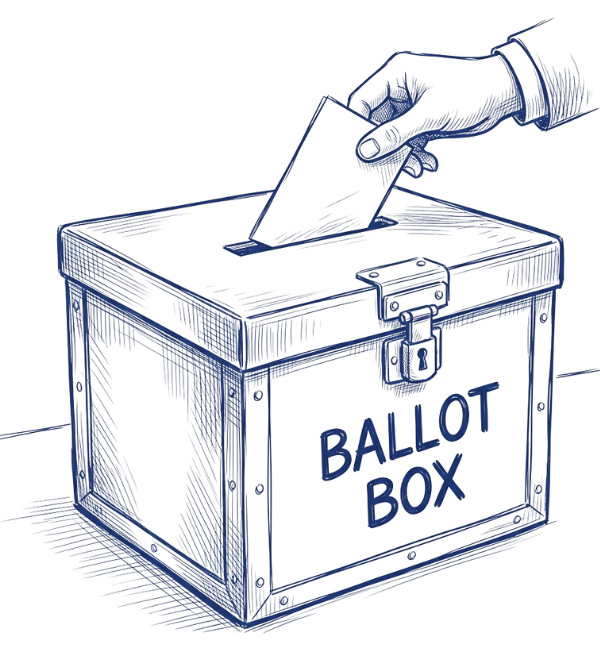
"The people of the United Kingdom have in their hands, as clay, a constitution which they have, and will continue to, mould in the image of their ideal society. Through electing Parliaments, they make their sovereign will known."
Government by the people is a maxim that pervades many Western democracies. It is no less true of the British constitutional system that the people have the power to persuade politicians of the day to recognise the need to bow to public opinion. Through capturing the imagination of the sovereign electorate, the constitution of the United Kingdom has become an organ of democracy. It is no longer the case that a cosy aristocracy directs the conversation of the nation or public opinion, but those conversations which take place in the public house, the shop, and the street.
People who have the vote must be persuaded. Where they are ignorant of political problems such that they can be "stampeded by slogans or specious promises or allegations of unknown terrors", or if they "do not see that acquiescence in a corrupt government is to take part in a conspiracy to establish tyranny", a wide but uninformed franchise is the path to demagoguery and dictatorship.
It is not merely a wide, well-informed franchise that governs the success of a democracy. Rather, it is the following cardinal factors: free and fair elections (upon which the character of the government depends solely), exercised secretly; and a choice between rival candidates advocating rival policies. This has differentiated British constitutional democracy from the 'people's democracy' of communist states, and from the autocratic systems of other authoritarian jurisdictions.
Each Parliament must begin, and end. It is a constitutional necessity. There must be a general election at least once every five years; and the law has provided this from at least 1716 (in the form of The Septennial Act 1716 (1 Geo 1 St 2 c 38); amended down the centuries. This is a rule of law. It can be changed, as is evidenced, but not without the assent of both Houses of Parliament (with the Commons notably being unable to overrule the Lords on matters pertaining to the maximum duration of Parliament).
Thus, we come to the root of the matter. The people of the United Kingdom have in their hands, as clay, a constitution which they have, and will continue to, mould in the image of their ideal society. By electing Parliaments, they make their sovereign will known. A party that seeks election must present a mandate for the people to decide on at the ballot box. A Party is an agglomeration of Members of Parliament (explained below) who broadly agree on affairs of state. But through choosing a representative which is best for them, the constitution provides for the greatest outlet of democracy at the most local level — one constituency, one vote to each person, and one representative.
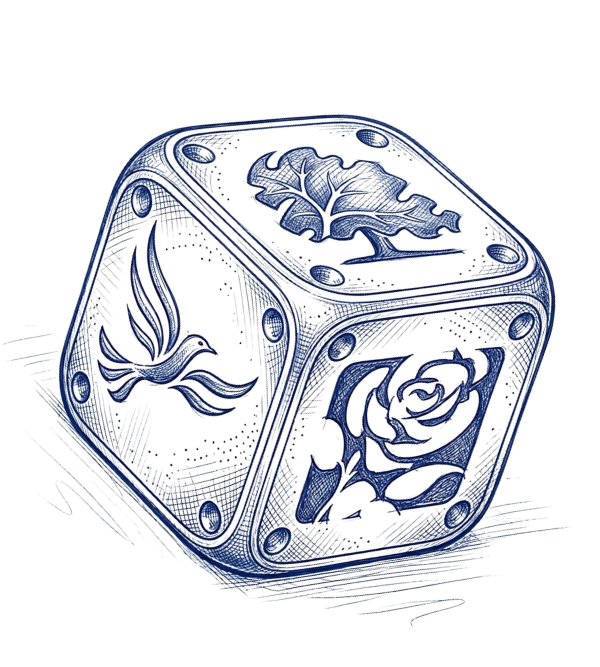
"They [parties] carry forward that which is required to secure an election victory, for the proportion of uncommitted sovereign electors is enough to determine the fate of any Party. They galvanise the people, helping to put long-standing principles into plain English, and enact policies that are in the collective welfare."
It is not difficult to defend the notion that the British Parliamentary system was the progenitor of the political party. It is yet another aspect, provided for through the custom of our constitution, that has developed out of a longstanding rejection of authoritarian "Councils of State". It represents the truly democratic suspicion that an individual may not always be right, and so a conglomeration of individuals who present articulate consensus is a better check-and-balance in times of controversy.
At the heart of government by Party is tolerance. A principle that has governed political machinations in Britain for centuries, carried out in its laws, it remains an attitude of mind. Because the majority of any democratic nation is never permanent, tolerance of different views has a strong root in our constitutional arrangement. Not only do opinions fluctuate, but they sometimes fluctuate violently, and a significant feature of British politics is the "swing of the pendulum".
What drives our politicians to conglomerate into Parties, instead of standing on their own merits? It hearkens back to what was said above. Collaboration, based on a set of principles, and the resolution of political differences being most conducive to the majority reaping the rewards of co-operation.
No party in the United Kingdom is founded upon an essentially unchangeable factor. You will not find a Labour Party comprised entirely of socialists, nor a Conservative Party of capitalists. Neither Party will draw its members from entirely one caste, class or creed. A wide range of members is the mainstay of consensus, and for proving the worthiness of a mandate to the electorate. The rise of the Labour Party in the first half of the 20th Century and the call for socialism did not fundamentally change the makeup of how we decide who to elect, the ways in which they put their mandate to the electorate, or the framework which they are governed by. They are beholden to a set of principles, agreed upon, handed down through collaboration and exchange, which the people have shaped to their collective belief in the welfare of society.
The Parties, as it is well-known, gather in Parliament, a sacred chamber of democracy and resolution of conflict. The policy decided upon when they come together is dependent upon the currents of public opinion. By contrast, in a dictatorship, freedom of speech and thought is muzzled, and it is difficult to ascertain what the prevailing opinion is. Britain, by its constitutional settlement, is confident in being quite the opposite. It leads, in most instances at least, to common sense prevailing, for politicians conglomerated into parties must, on the whole, federate themselves to the interests of their Party, inevitably bringing out the reasonable in them.
The purpose of the Party, therefore, is to support the Government in carrying out the policy of the party; or if in Opposition, to criticise the Government insofar as it fails to carry out its own mandate promised to the electorate. The Opposition must always be mindful that it will likely be in government within the decade, and so should responsibly keep its own fingers on the pulse of the nation. It should not oppose for the sake of opposition, or merely obstruct the business of government, but table important considerations which may point to flaws in the mandate of the ruling party.
It follows that Government decisions, and Opposition criticisms, are abed in a long history of politicians that have come before the Parties of today. Each steps into the shoes of Opposition and Government, but those shoes rightfully belong to a gradually eked out constitution of custom, convention and inherited wisdom.
Then what is 'Party policy', and its role in the constitution? It, too, reaches down the centuries and culminates ever in the present. Guiding hands from ages long since past shape that which is attractive to the modern Britons, and it reaches down through custom and convention because we are in effect the same people enjoying the same settlement as those two hundred years ago.
The role of Parties in the British constitution can aptly be summed up in their role as vehicles. In their capacity as vehicles, they carry forward that which is required to secure an election victory, for the proportion of uncommitted sovereign electors is enough to determine the fate of any Party. They galvanise the people, helping to put long-standing principles into plain English, and enact policies that are in the collective welfare. The constitution provides for them because they are conducive to collaboration, consensus and custom, three 'C's' that the constitution repeatedly returns to.
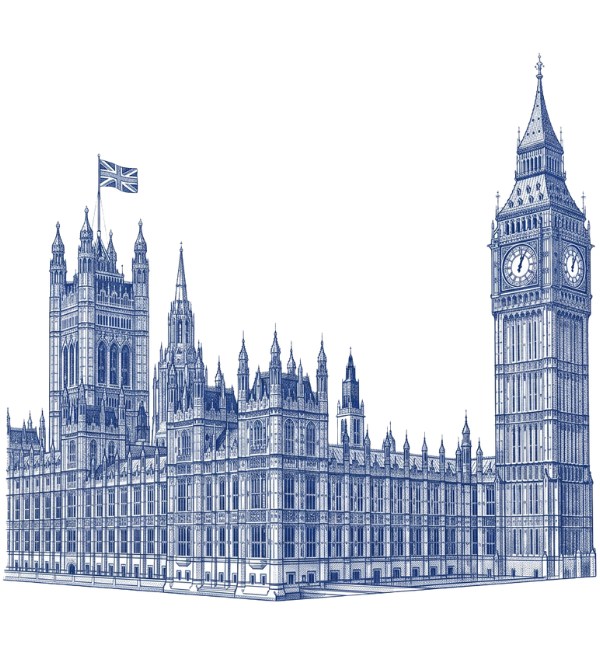
The two chambers of the Houses of Parliament form the legislative heart of the United Kingdom's constitutional arrangement. Select a chamber below to read more.
"These examples show the importance of the monarchy as a stabilising force. The monarch is in a naturally advantageous position, being both 'above' politics, and being able to remain in close contact with the Government."
The Sovereign has a key role. And it is the role on which all other parts of the Constitution depend for their proper function. That is the appointment of the Prime Minister. Somewhere, in every constitution, there must be someone who takes the first step to form a Government when a gap is threatened. And for the United Kingdom, that role is occupied by His Majesty.
In every case, the Party victorious at the election will hold a miniature election amongst themselves, to propose a candidate and advise His Majesty that they should be the one who should become Prime Minister. And yet, it is essential to note, this advice does not bind the Sovereign. Moreover, the Sovereign has a choice in two cases: when the Party has a majority but no leader, or when no party has a majority. In the former case, the Sovereign must appoint a Prime Minister who can command the willing support of the party majority.
There have been historical situations where the Sovereign refused to ask for the advice of the outgoing Prime Minister. For instance, Queen Victoria did not ask Gladstone's advice in 1894 and had already decided to send for Lord Rosebery. Nor was it certain that Edward VII asked Lord Salisbury's advice in 1902, or again in 1908 as to whether Campbell-Bannerman was consulted. Even if a new procedure for putting the most popular Party figure in front of the Sovereign is developed, the Sovereign's prerogative in this matter remains unaffected.
The function is equally important where no party has obtained a majority. The resignation of Stanley Baldwin's government in 1924 saw George V called upon to decide whether to summon Asquith of the Liberal Party, or Ramsay MacDonald as leader of the Labour Party, to form a government, sending for MacDonald in the end. There was an even more complicated situation in 1931, where the Labour Government, with no majority, had resigned, and the nation was suffering a financial crisis. The King commissioned MacDonald to form a coalition, being much criticised for doing so, but this act was not unconstitutional.
These examples, although infrequent, show the importance of the monarchy as a stabilising force. The monarch is in a naturally advantageous position, being both 'above' politics, and being able to remain in close contact with the Government.
In many other cases the Sovereign exercises functions, many of them formal. The Sovereign is present at each meeting of the Privy Council. The Sovereign appoints Ministers, ambassadors, judges, and officers in the military and airforce, as well as senior civil servants. The Sovereign prorogues and summons Parliament, typically in the grand ceremony of the State Opening. In nearly every case, he will act on the advice of his Ministers, signing Acts of Parliament into law with Royal Assent, putting him in a position to ask for explanations and to give advice.
The Sovereign, to this day, receives a copy of the minutes of his Cabinet, and also of the 'daily print' of any communications circulated by the Foreign Office. He follows the debates in Parliament through the provision of an Official Report, supplementing that which is received from newspapers, personal inspections and interviews, as well as a staff to keep him informed of the developments of political life.
How may the Sovereign come to influence these events? It depends entirely on the Sovereign's personal qualities. Qualities such as industry, and common sense, can be extremely valuable if used at the centre of affairs. Some historical examples include King George V and Stanley Baldwin, and Queen Victoria and Gladstone, who famously complained about the latter as 'addressing me as if I were a public meeting'. The Sovereign therefore can do a world of good by simply injecting a little common sense.
What, then, can the Sovereign offer us? In his present constitutional role, a great deal. In the event that our Trinity of Government, Party, and People run into a complete deadlock, the Sovereign may step in to exercise these important powers, laying dormant until they are needed to keep the business of government moving.
Outside of the exceptional constitutional functions, the Monarchy regularly exercises what Bagehot terms 'dignified' functions. Monarchy, therefore, is an essential Fifth Column, a useful and important focus for patriotism. "King and Country" sustained the British people throughout two World Wars. The same immense popularity of the monarchy as a unifying force continues today. Each action of the Sovereign serves to create a common sentiment because he is a servant to his nation.